

Oman-UAE Border Crossing by Bus: 2026 Traveller's Guide

Crossing the Oman–UAE Border by Bus: What Travellers Need to Know
Crossing an international land border can feel like the most intimidating part of an overland trip, especially when navigating unfamiliar paperwork. If you are preparing for an Oman-UAE border crossing by bus for the first time, a bit of hesitation is normal. However, thousands of passengers make this exact trip every week, and the process is quick and routine once you know what to expect.
This guide covers which border post your bus will use, visa rules by nationality, step-by-step checkpoint procedures, total costs, and travel times.
A quick rundown:
Border Posts: Buses cross at Hatta/Al Wajajah (Muscat–Dubai/Sharjah), the Al Ain/Buraimi area (Muscat–Abu Dhabi), or Khatmat Malaha (Sohar–Fujairah).
Visas & IDs: GCC and UAE nationals can cross using a national ID card. Other nationalities generally require an Oman eVisa or visa on arrival, plus a valid UAE visa.
Duration: The full crossing typically takes 30 to 60 minutes, extending up to two hours during Fridays, public holidays, and Eid.
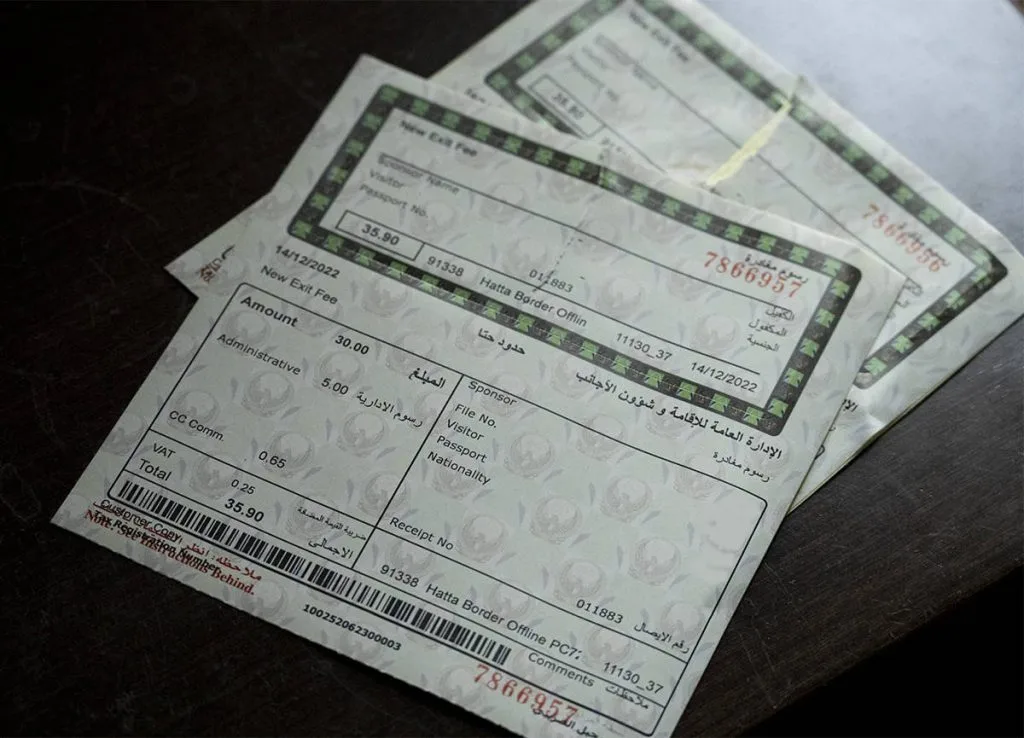
Fees: Expect a UAE land exit fee of approximately AED 35 (+ 5% VAT). Oman generally does not charge a separate departure fee.
Pro-Tip: Book your ticket with Shawy Reservations in advance, carry physical document backups, and keep small local cash on hand for border fees.
Which Border Will Your Bus Cross?
Not every Oman-UAE bus uses the same crossing point. The specific border depends on your route and bus operator.
Hatta / Al Wajajah: Muscat to Dubai and Sharjah
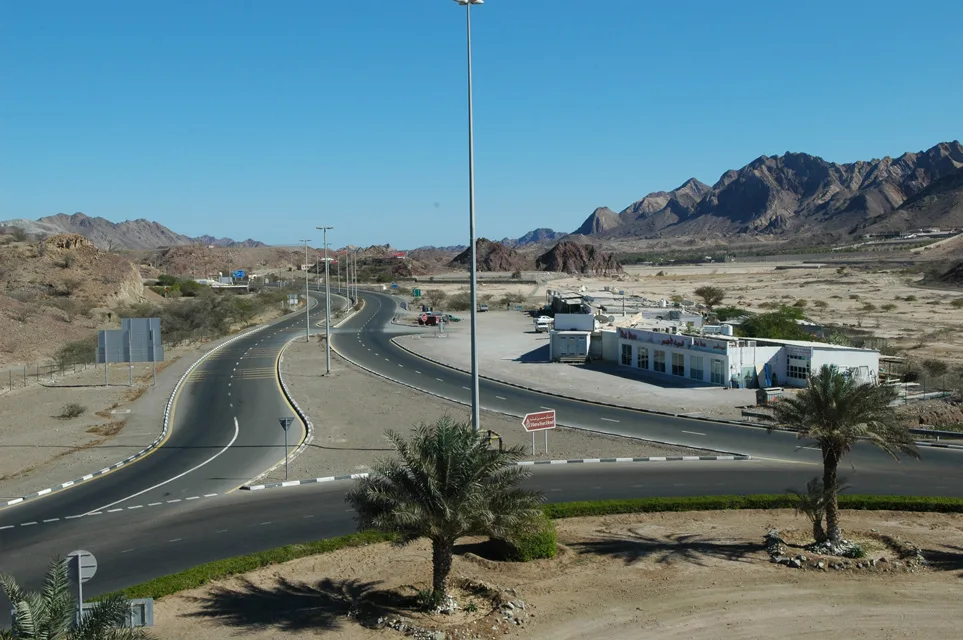
The Hatta border crossing (known as Al Wajajah on the Omani side) is the main checkpoint for overland transit between the two countries. Situated closest to Dubai, it operates 24/7 and serves all nationalities meeting standard entry requirements. It is the standard route for most Muscat–Dubai and Muscat–Sharjah bus lines.
Al Ain / Buraimi Area: Muscat to Abu Dhabi
Buses heading to the UAE capital, including the Mwasalat-operated Muscat–Abu Dhabi service, pass through the Al Ain/Buraimi border area. Several checkpoints sit along this stretch: some are reserved exclusively for GCC nationals, while others (such as the Mezyad/Hafeet post) accept all international travellers.
Khatmat Malaha & Northern Posts: Sohar and the Fujairah Coast
Routes connecting northern Omani coastal cities like Sohar with Fujairah generally utilize the Khatmat Malaha crossing. Traffic here is typically lighter than at Hatta, leading to faster processing outside peak hours. (Note: Musandam-bound travellers use separate checkpoints further north).
If you're starting from Oman's northern coast rather than the capital, the Sohar to Sharjah bus route is the main scheduled crossing for this corridor.
Note: Border assignments depend on your ticketed route. Double-check your booking details or contact Shawy support if you need confirmation.
Entry Requirements: Documents and Visas
Visa policies for crossing the Oman-UAE land border depend primarily on your nationality and residency status.
GCC and UAE Nationals
For UAE and GCC citizens, border processing is fast and direct. Your national ID card is sufficient for entry and exit in both directions, with no advance visas required.
Expats and International Tourists
Non-GCC passport holders should organize their documentation ahead of time:
Entering Oman: Most travellers require an Oman eVisa applied for in advance via the official Royal Oman Police portal (evisa.rop.gov.om), though select nationalities qualify for a 14-day visa-free entry or visa on arrival.
Entering the UAE: Requires a valid UAE residence visa, an approved entry visa, or eligibility for a visa on arrival.
Important Visa Detail: Exiting the UAE via a land border consumes a single-entry visa. If you intend to return to the UAE after your journey in Oman, ensure you hold a valid multiple-entry visa or arrange a new entry permit in advance.
Document Checklist
Before boarding your bus, make sure you have the following ready:
Passport with at least six months of remaining validity
Oman eVisa or visa confirmation (if applicable)
UAE residence or entry visa confirmation (if applicable)
Printed or digital Shawy bus ticket
Emirates ID or Oman Resident Card (for local expats)
Meeting these requirements in advance is the single biggest factor in ensuring a smooth trip. Most delays stem from missing paperwork rather than the border procedures themselves.
What Happens at the Border, Step by Step
Understanding the mechanics of the land crossing takes away the guesswork.
Step 1: Exit Stamp From the Country You're Leaving
When your bus arrives at the first checkpoint, passengers disembark with their passports and hand luggage and queue at the immigration counter for an exit stamp from the country they're departing. Officers will check that your passport is valid and may ask a few routine questions about your onward destination. This part of the process moves quickly when your documents are ready and easy to find.
Step 2: Cross to the Other Side for Your Entry Stamp
Once every passenger has an exit stamp, the bus moves through the buffer zone to the second country's checkpoint. There, you'll go through immigration again to receive your entry stamp, and if you need a visa on arrival, this is where it's issued and paid for. Keep your ticket or booking confirmation handy, as some checkpoints ask to see it alongside your passport.
Step 3: Luggage and Bus Inspection
Alongside passport control, expect a customs and luggage check. Officers may ask you to open bags for a quick visual inspection, and the bus itself is typically checked before being cleared to continue. Standard customs rules apply on both sides, so declare anything that needs declaring, including cash above the local threshold, to avoid delays.
How the Bus Process Works
Because the bus cannot depart until every passenger completes immigration, one person with missing documents can delay the entire vehicle. Operators frequently perform headcounts and ask passengers to keep their tickets accessible before boarding.
Photography & Video: Filming and photography are strictly prohibited at all border control checkpoints. Keep phones tucked away while inside immigration halls.
Special Assistance: If you are travelling with young children, elderly family members, or anyone needing extra mobility assistance, notify your bus driver early so they can accommodate you.
Border Fees and Costs
Budgeting for your Oman–UAE journey is straightforward, as border-related costs are generally modest and primarily incurred when exiting. Depending on your nationality, you may also need to obtain a visa before travelling. Here's an overview of the fees and visa costs you should expect:
UAE Exit Fee: Travelers leaving the UAE by land are typically required to pay an exit fee of approximately AED 35 per person, plus 5% VAT. This mandatory fee is subject to change.
Oman Departure Fee: Oman generally does not charge a departure fee for travellers exiting the country via land border crossings.
Oman Visa / eVisa: If you are a non-GCC national, you may need an Oman visa or eVisa. Visa requirements and fees vary by nationality. For the latest visa fees and to apply online, visit the official Royal Oman Police eVisa portal: eVisa.rop.gov.om.
UAE Entry Visa: Travelers who are not GCC nationals or visa-exempt may require a UAE entry visa. Eligibility and visa fees vary depending on your nationality.
Please note: Border fees, visa requirements, and associated costs are subject to change. Always check the latest information with the relevant immigration authorities before your journey.
Tip: Carry a small amount of cash, ideally both AED and OMR, to cover fees quickly without relying on card machines, which aren't always available at every checkpoint. Keep any receipts in case you need them later in your trip, and note that cash above OMR 6,000 must be declared at the border.
How Long Does the Oman-UAE Border Crossing Take by Bus?
On a typical day, the full crossing process, both sides combined, takes around 30 to 60 minutes. Both Hatta/Al Wajajah and the Al Ain/Buraimi crossings generally operate 24 hours a day, so there's no fixed opening time to plan around. What does change with the clock is traffic volume, and crossing during quieter hours is simply faster.
This can stretch to roughly two hours during high-traffic periods such as Fridays, public holidays, and especially Eid, when both leisure and family travel spike sharply. If your schedule is flexible, early morning or midweek departures tend to have the smoothest crossings, since fewer vehicles are queued at the same time. If your trip falls during a known holiday period, build in extra buffer time for whatever comes next on your itinerary, and check for any service updates from your bus operator before you travel.
Muscat to Al Ain and Abu Dhabi by Bus
For travellers doing the overland trip, here's how the border fits into the wider journey:
Muscat to Al Ain: Crosses via Khatm Al Shikla border, a relatively small part of the total travel time.
Muscat to Abu Dhabi: Runs through the Al Ain/Buraimi area, including the Mwasalat service that connects directly to the UAE capital.
Muscat to Sharjah: Also typically routes through Hatta, a useful alternative if your final destination sits closer to Sharjah than central Dubai.
For comprehensive timetables, ticket pricing, and pickup locations, visit Shawy's dedicated route pages for Muscat–Sharjah, Muscat-Al Ain Muscat–Abu Dhabi.
Tips for a Seamless Crossing
Secure Visas Early: Apply for your eVisa well ahead of time. Processing delays on the day of travel could cause you to miss your bus.
Print Backup Copies: Keep physical prints of your passport, visa grants, and bus tickets in case mobile coverage drops at the border.
Keep Cash Ready: Hold small AED and OMR notes for quick fee payments.
Travel Off-Peak: Avoid Thursday nights, holiday weekends, and major festival periods whenever possible.
Check Baggage Rules: Review prohibited items and allowance limits before packing to speed up customs checks.
Keep Documents Grouped: When travelling as a family, keep all passports and permits together in one accessible folder.
Confirm Your Oman–UAE Bus
Everything is in place for your trip. With routine border procedures and comfortable coach services, traveling between Oman and the UAE is easier than ever.
Reserve your OMAN-UAE bus ticket with Shawy today and get on the road to a safe, comfortable, and worry-free journey.
اس مضمون کے بارے میں
Shawy کی ادارتی ٹیم کی تحریر، جو آپریٹر ڈیٹا اور Shawy کے اپنے پلیٹ فارم کے بکنگ ریکارڈ پر مبنی ہے۔
- Intercity bus travel in Oman
- Oman to GCC land border crossings
- Mwasalat bus network and routes